


The Triangle district is called the « Triangle. » The rest of France insists on calling it the « Golden Triangle » — here in Bordeaux, we simply say « the Triangle. » It is the most central and sought-after address in the city, a neighborhood of blond stone buildings and bourgeois apartments, just steps from the Grand Théâtre and Place des Grands Hommes. It is perfectly designed and bordered by the Cours de l'Intendance, the Allées de Tourny, and the Cours Clémenceau, three perfect lines drawn in the 18th century, the Age of Enlightenment, to assert the power of the city.

Contact us
Bordeaux
Sotheby's International Realty
Sotheby's International Realty
- 40 Cours de Verdun
- 33000 Bordeaux, France
- +33 5 56 79 63 62
Cap Ferret / Pyla
Sotheby's International Realty
Sotheby's International Realty
- 13 Boulevard de l'Océan
- 33115 Pyla sur mer, France
- +33 5 57 72 04 54
Cap Ferret / Pyla
Sotheby's International Realty
Sotheby's International Realty
- 186 bis route du Cap Ferret, Le Canon
- 33950 Lège-Cap Ferret, France
- +33 5 56 60 68 32
Send an email
- Home
- >
- Triangle
Luxury apartments, French style, with balconies and high ceilings. Bordeaux Triangle
11
LuxuryProperties
Read more
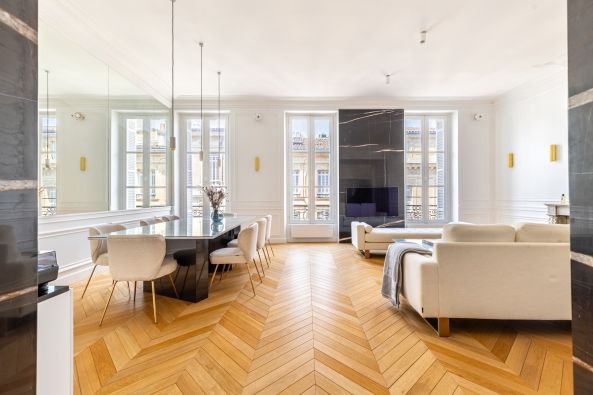
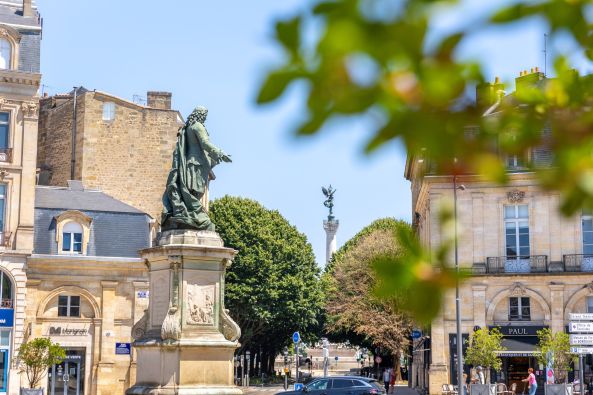
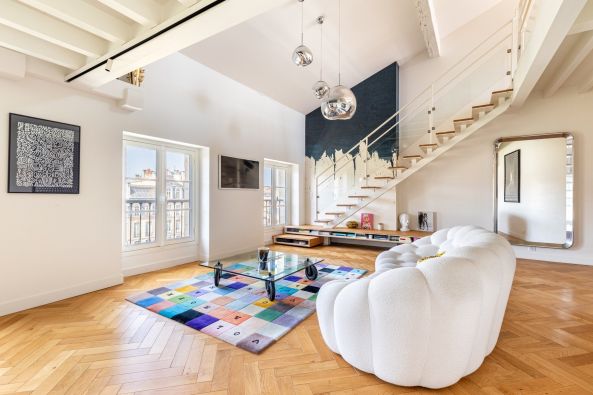
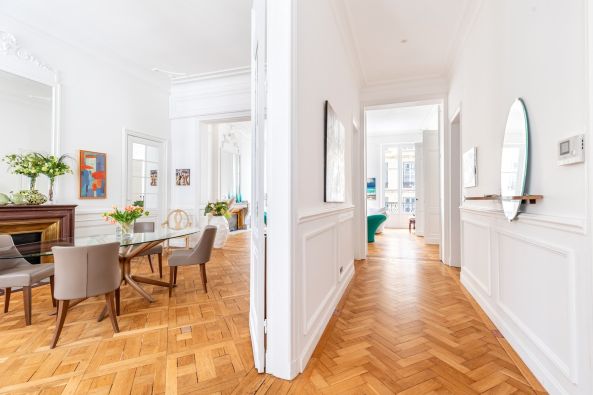
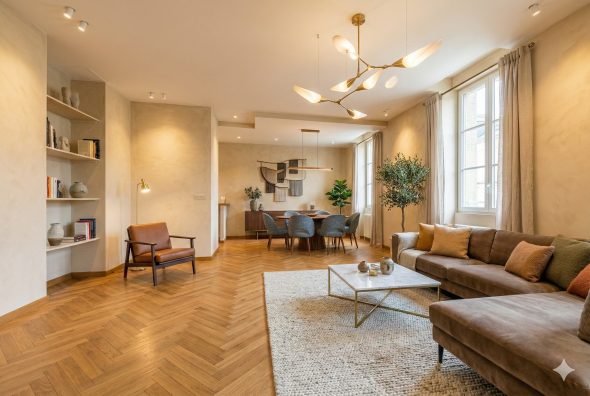
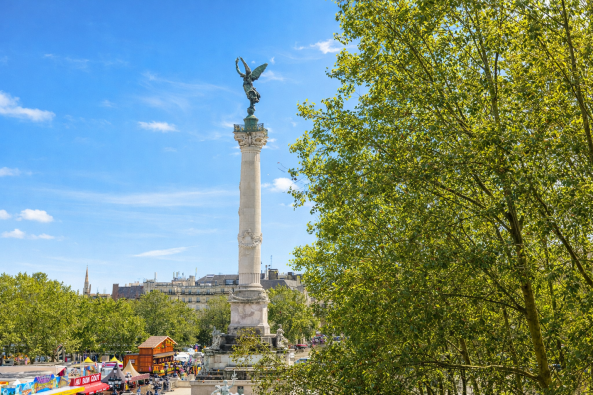
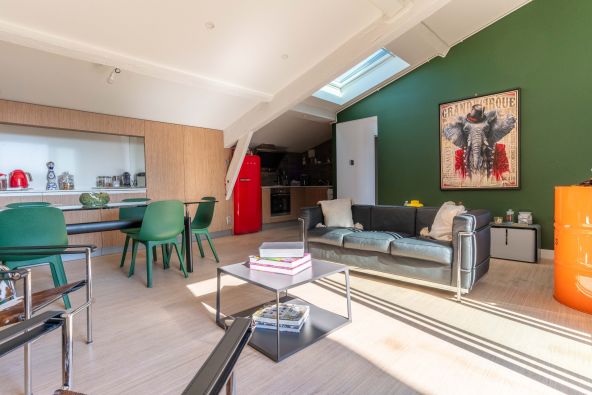
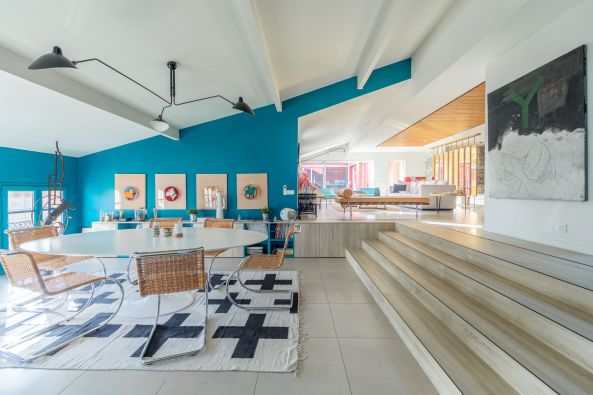
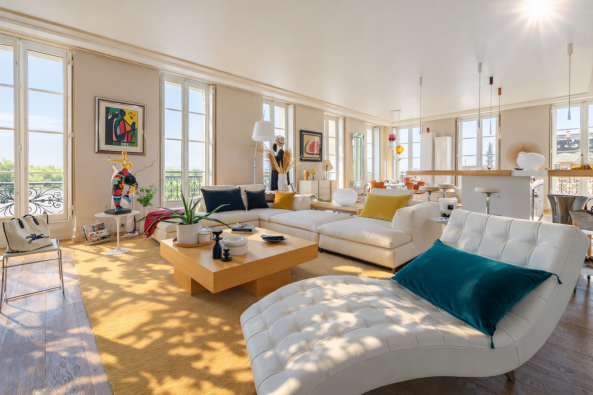
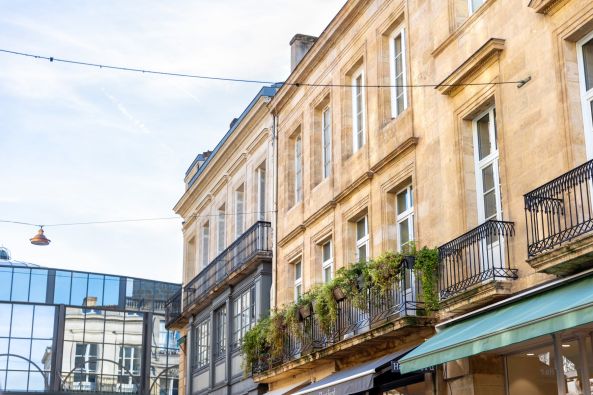
The Triangle d'Or of Bordeaux, from Cours de l'Intendance to Allées de Tourny
The buildings are made of blond Asturian stone, the facades have been magnificently restored in recent years, and the wrought-iron balconies adorn the whole with elegance.
The interiors here feature all the hallmarks of bourgeois style, perfectly preserved: high ceilings (once lit by candlelight), marble fireplaces, Versailles or Hungarian point parquet flooring, cornices, rosettes and trumeaux.
It is a well-preserved neighborhood, beautifully punctuated by:
- the Grand Théâtre (inaugurated in 1780, designed by Victor Louis, commissioned by Marshal Richelieu), an architectural masterpiece in the neoclassical style, which today houses the Bordeaux National Opera, its orchestra, and its dance company,
- Place Gambetta, recently reorganized (built between 1758 and 1770; its orderly facades all feature a mezzanine level and are topped with a macaron. This square has always been dedicated to commerce. It has changed names over the centuries: Place du Roi de Rome, Place Nationale, and Place Dauphine). Initially, the land was home to the cemetery of the Saint André hospital and a few shops. Today, it is organized around a beautiful shaded public garden, and its south-eastern section has become pedestrian-only. A delight!
- Place Tourny, which punctuates the Allées de Tourny. These bright, tree-lined avenues were laid out between 1743 and 1757 on the route of an ancient road which, since antiquity, served the Médoc region near the Château Trompette (destroyed in 1649 following an uprising by the people of Bordeaux).
Which apartments can you buy in the Triangle district?
Here, buyers mostly purchase apartments rather than houses: townhouses (or private mansions) are rare in the Triangle and are snapped up quickly. Most of the market is therefore made up of apartments on the noble floors of 18th-century buildings, with generous living spaces, tall French windows, finely worked solid parquet floors, and sometimes a balcony running along the facade.
Each apartment is unique and valued according to its floor and the view it offers. The quality of its period features, very often perfectly preserved in central Bordeaux, is also a real asset. Certain additional features can make all the difference in price: a lift, a parking space, a vaulted cellar. A top-floor apartment under the rooftops, with the city's chimneys on the horizon, remains one of the most sought-after properties in the district, especially if air-conditioned.
The Triangle never loses value: here, the address is passed down or bought at market price. Our luxury apartments in Bordeaux give an idea of the properties currently on the market. If you already own a property in the district, you can also get your apartment appraised.
Your day in the heart of the luxurious Triangle district ...
- 8:00 a.m.: French breakfast at Le Régent, with a view of the Grand Théâtre
- 9:00 a.m.: stroll under the trees lining the avenues, put together a bouquet of flowers at Sadia
- 11:00 a.m.: shopping around Place des Grands Hommes and a refreshing lunch break at Any'teas in the Sarget passage
- 3:00 p.m.: stroll along Cours Mably and visit Notre Dame Church
- 7:30 p.m.: early dinner at Bouillon des Quinconces before heading to Le Français cinema, a charming Bordeaux institution
The Triangle is a bit like the Bordeaux of the Enlightenment, an eternal backdrop for costume dramas and imaginary horse-drawn carriages ... It's a place of work known intimately by our professional teams, who specialize in this district of Bordeaux.
Are you coming?!